


Austin Seven - The Motor For The Million
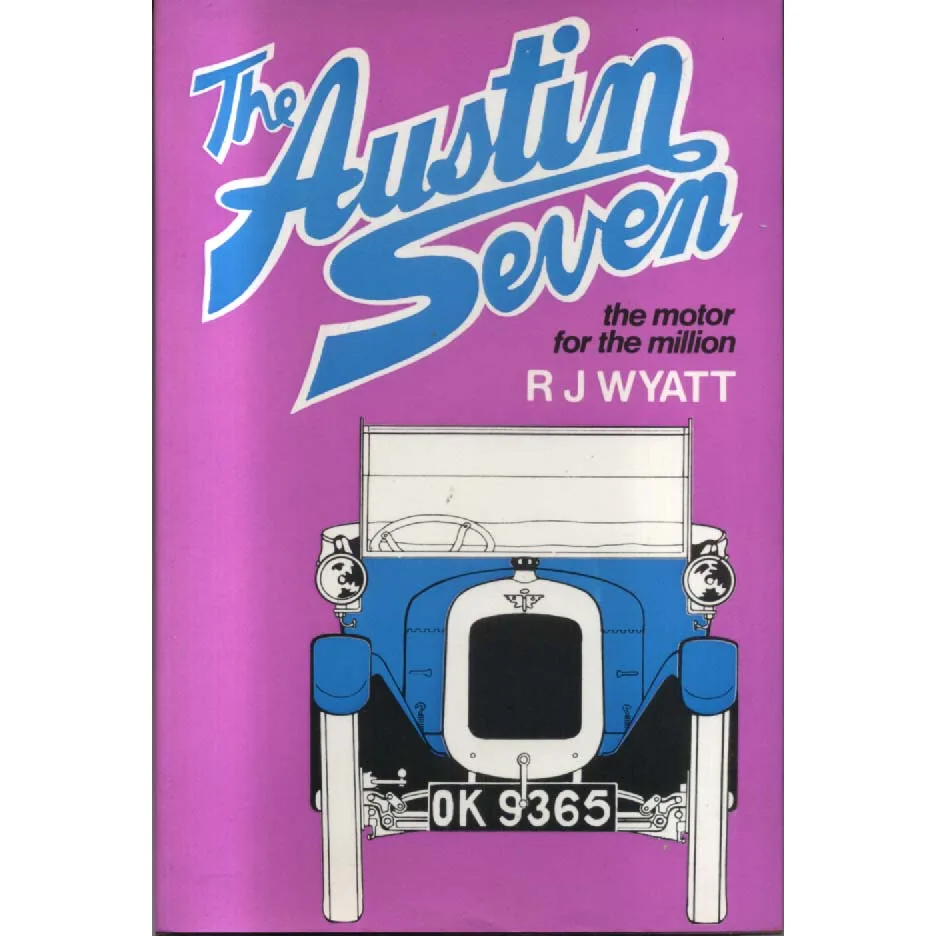
Publisher: David and Charles
Format: Hardback
ISBN: 0715357662
There are cars that aspire to greatness by being powerful, luxurious, rare, or deeply intimidating to park. And then there is the Austin Seven, which achieved immortality by being small, sensible, affordable, and quietly revolutionary — the automotive equivalent of a determined little clerk who ends up changing the country while larger, louder people are still adjusting their cufflinks.
Austin Seven – The Motor for the Million (1972) by R. J. Wyatt, published by David & Charles, is a loving tribute to one of the most important little cars ever to wobble, buzz, and cheerfully chug its way into British life. This is not merely a book about a vehicle. It is a book about a social event on wheels. The Austin Seven was not just transport; it was mobility for ordinary people, freedom with mudguards, aspiration in a compact tin form.
The title says it all, really: the motor for the million. Not the motor for dukes, racing legends, or monocled eccentrics with private chauffeurs. The motor for everyone else. The people who wanted to go somewhere under their own power, preferably without needing a stately home or a petroleum empire to support the effort. In that sense, the Austin Seven belongs to a very distinguished category of machine: the sort that genuinely alters daily life while looking almost absurdly modest about it.
And modest it was. The Austin Seven has never possessed the hulking glamour of grand tourers or the thunderous swagger of sports cars. It is small. It is upright. It often looks faintly surprised to be involved in motoring at all. But that is part of its genius. It arrived at a moment when Britain needed practical, affordable private transport, and it delivered exactly that with an air of brisk, unpretentious competence. It did not roar into history. It puttered there, economically.
Wyatt’s book is exactly the kind of volume enthusiasts treasure because it understands that old cars are never just old cars. They are pieces of design history, industrial history, and social history all bolted together. The Austin Seven matters because it helped democratise motoring. It put ordinary families, tradesmen, young drivers, hobbyists, and dreamers on the road. It was a beginner’s car, a family car, an improver’s car, and eventually a nostalgia object for those who remembered when driving still involved a bit of optimism, a scarf, and a tolerance for draughts.
There is also something delightfully ironic about the way truly influential machines so often look unassuming. If some modern manufacturer produced the Austin Seven today, there would be launch videos, brand consultants, and a campaign about “redefining urban mobility.” In its own time, the Seven simply got on with the job. It was ingenious, economical, adaptable, and surprisingly versatile, all without feeling the need to announce itself as a disruptor. It just quietly disrupted anyway.
A book like this will appeal not only to dedicated Austin enthusiasts, though they will naturally be in their element, but also to readers interested in vintage motoring, British engineering, and the social history of everyday life. Because the Austin Seven is one of those machines that sits at the junction of all three. It is a story about design and mechanics, certainly, but also about class, access, changing habits, and the moment when the road began to belong to more than just the wealthy or the reckless.
This Very Good copy, from the ever-honking and gloriously overstocked precincts of Crappy Old Books, offers all the pleasure of a proper motoring history in pleasingly solid second-hand form. It is the sort of book that belongs beside old road atlases, workshop manuals, sepia photographs, and people who use the phrase “pre-war charm” without irony, or at least without enough irony to stop themselves buying another motoring title.
And what a charming subject it is. The Austin Seven has a peculiar charisma that larger cars cannot quite replicate. It looks companionable. It looks game. It looks as if it might cheerfully set off across 1920s Britain with a picnic hamper and a mild sense of mechanical uncertainty. That is why it endures in the imagination: not as brute force, but as plucky possibility.
In short, Austin Seven – The Motor for the Million is a warm, engaging celebration of the small car that helped put Britain on the move. It honours a machine that was cleverer, more significant, and more lovable than its dimensions might suggest, and reminds us that history is not always made by the biggest engine in the room.
A splendid choice for anyone who believes the most important vehicles are not necessarily the fastest or flashiest, but the ones that gave ordinary people a seat at the wheel.
Keep browsing: See more Transport books Other books by RJ Wyatt
